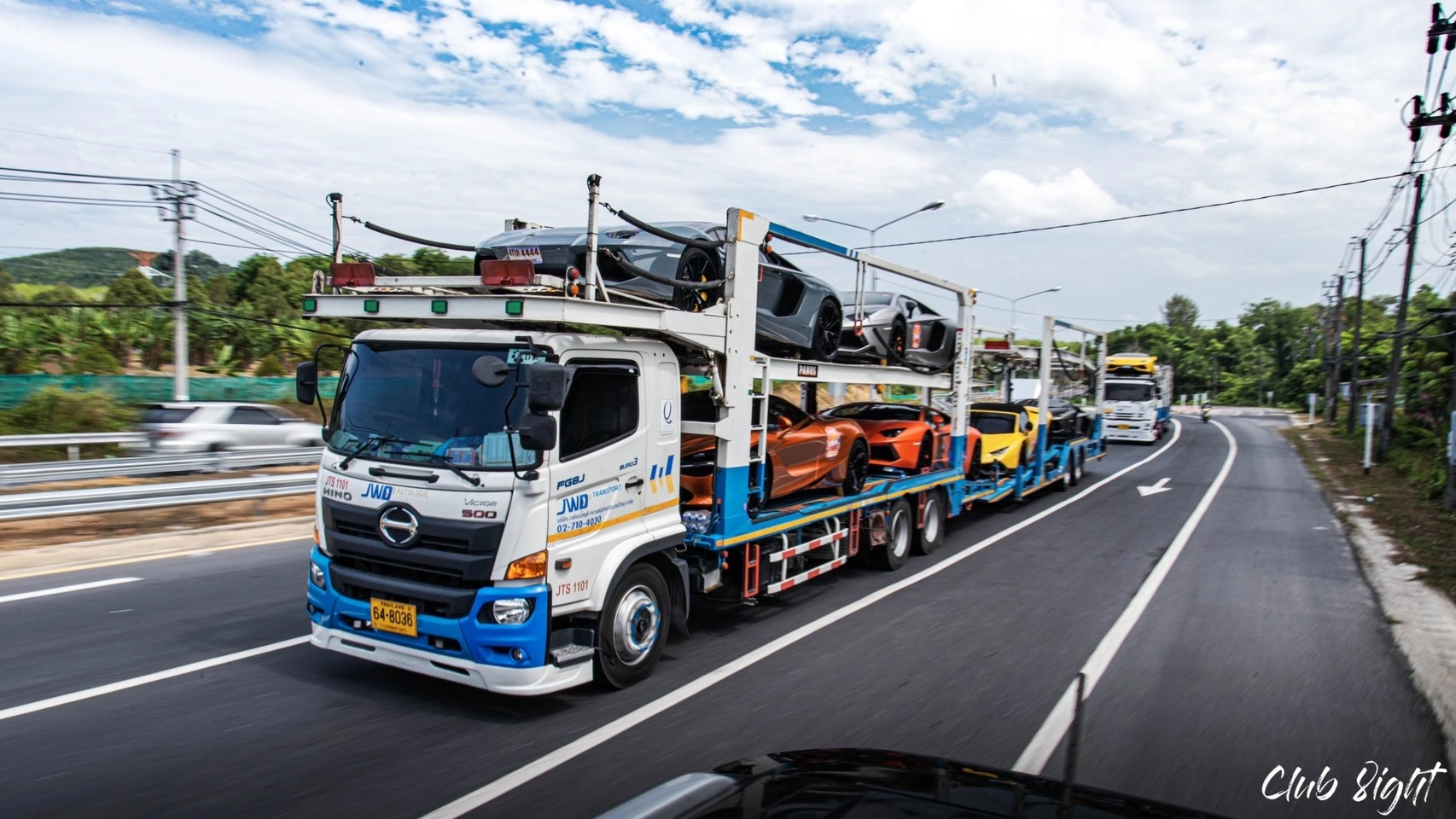
Currently, there are many car showrooms from various brands located in different places, providing customers with convenient, comfortable, and fast service. When a transaction is made, buyers can pick up their cars at designated service points, receiving a flawless car ready for use with ease. But did you know how logistics plays a role in getting a car to you? This article will explain it.
The history of automobile manufacturing in Thailand began during the reign of King Rama V when the country started importing cars from abroad, mostly from Europe, using ocean freight for transportation. Around 1962, Thailand began manufacturing cars locally, with the government implementing various policies to attract investment in the automotive assembly industry, including tax incentives. This led to the continuous development of the automotive industry, making Thailand a hub for car production and export.
As of 2019, Thailand ranked 11th globally, 5th in Asia, and 1st in ASEAN in terms of total vehicle production.
1. Logistics Processes in the Manufacturing and Transportation of Cars
Transporting Automotive Parts
Transporting car parts in the automotive manufacturing industry is a critical process that manufacturers focus on heavily. This is to support Just in Time (JIT) production, a method that enhances efficiency and reduces excess production. One commonly used logistics method in car part transportation is called the Milk Run. This system is inspired by the traditional method of delivering fresh milk from farms to homes. In this method, empty milk bottles are collected and replaced with full ones, ensuring the return trip is never wasted. This concept is applied in logistics to optimize transport routes for automotive parts, reducing costs and increasing efficiency.
2. Transporting Finished Cars to Storage Yards for Export
Once the cars are fully assembled, different car brands seek automotive logistics providers that can store and distribute the cars to dealerships both locally and internationally.
A comprehensive logistics provider will begin by using Car Carriers to transport the vehicles from the factory to storage yards. These yards use specialized management systems to organize and track the vehicles, ensuring that they are easily accessible. Additional services may include touch-ups, painting, rust protection, accessory installations, and inspection for foreign matter (like weeds or insects) before exporting the cars or delivering them to customers.
The final step is transporting the vehicles either to ports for export or to dealerships within the country.
Ensuring Smooth Operations Through Logistics
Logistics plays a vital role in the automotive industry, driving smooth operations, maintaining product quality, and ensuring that cars reach customers in pristine condition—just as if they had come directly from the factory.
If you're looking for an automotive logistics and parts provider, SCGJWD offers a comprehensive, one-stop solution for managing your products.