Key Takeaways
- FOB (Free on Board) is a sea freight term that defines when the seller’s responsibility ends and the buyer’s begins, specifically when the goods are loaded onto the vessel.
- Buyers under FOB are responsible for freight, insurance, destination customs, import duties, port handling, and inland delivery.
- Sellers must handle inland transport to the port, export customs, loading, and all documentation until the vessel is loaded.
- FOB vs CIF: Both terms transfer risk at the port of loading, but CIF includes freight and insurance in the seller’s price.
- FOB is ideal for buyers who want control over shipping costs and schedules; CIF suits those who want a simplified process.
- SCGJWD supports exporters with inland transport, customs, document prep, warehousing, and cold chain logistics under every term, including the most popular option, FOB.
FOB (Free on Board) is one of the most commonly used Incoterms in global trade, especially in sea freight. Whether you're a factory manager, supply chain professional, or business owner entering international markets, understanding the FOB shipping term can help you manage cost, control, and risk more effectively.
If you are looking for a reliable international transportation company in Thailand, SCGJWD is here to help with every stage of your export operations, from inland transport and documentation to freight coordination and handover to your nominated carriers.
What Does FOB Mean in Shipping?
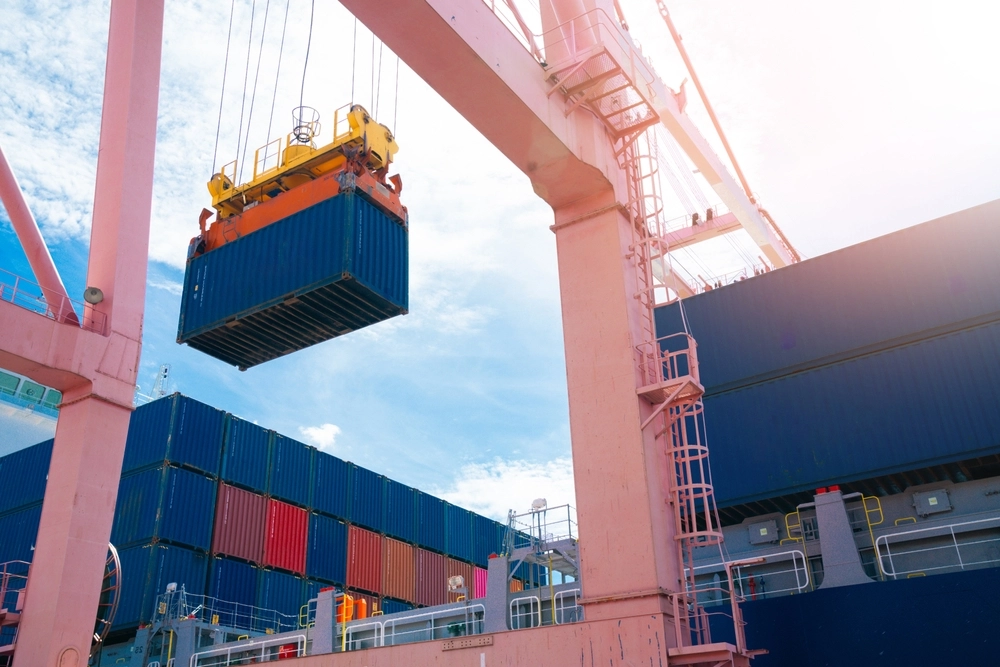
Short for Free on Board, FOB is a shipping term that defines when the responsibility and risk of goods shift from the seller to the buyer in maritime trade. Under FOB, the seller delivers the goods onboard the vessel at the agreed port of shipment. Once the goods are loaded onto the vessel, all responsibility transfers to the buyer. This Incoterm is used only for sea freight or inland waterway transport and is commonly seen in large-scale shipping of raw materials, industrial equipment, or full-container loads (FCL).
Types of FOB Terms
FOB Origin (Shipping Point): Where the risk passes to the buyer when the goods are loaded onto the vessel at the seller’s port.
FOB Destination: A common US domestic trade term where the seller bears the cost and risk until goods reach the buyer’s location. It is not an official Incoterm.
Understanding FOB Shipping Terms
FOB defines a clear point of risk transfer when the goods are loaded onto the vessel at the port of origin. This helps prevent disputes, clarifies responsibilities, and provides cost transparency. It's especially useful in: containerized shipping, bulk cargo trade, and port-to-port transactions. Typical documents involved include the commercial Invoice, which outlines the sale transaction and value of goods; packing list, which details the contents, dimensions, and weight of the shipment; bill of lading, which is issued by the carrier to confirm cargo receipt and vessel loading; and export customs documents, which are submitted to local customs authorities to gain export clearance.
Clarity around FOB responsibilities helps prevent disputes over damage, delay, or cost assumptions. It also helps assign financial responsibility to the right party, improve coordination with freight forwarders, and reduce liability risks for both buyers and sellers.
Buyer Responsibilities Under FOB (Free on Board)
Under FOB terms, the buyer assumes risk and responsibility once the goods are safely loaded onboard the vessel at the port of shipment. Here’s what that includes:
Arrange main carriage: The buyer selects and contracts with the shipping line or freight forwarder for the main leg of the transport, gaining more control over cost and schedule.
Pay for international freight: All charges from the loading port to the final destination, including freight rates, surcharges, and container handling fees, are borne by the buyer.
Purchase marine insurance (optional): The buyer assumes the risk of loss or damage once the cargo is loaded and should arrange insurance to protect against incidents that may occur while in transit.
Destination customs clearance: The buyer is responsible for clearing the goods through customs in the destination country. This includes documentation, regulatory compliance, and communication with local authorities.
Import duties & taxes: All import-related charges, such as VAT, GST, or tariffs, are paid by the buyer, as goods arrive under their account and control.
Port handling at destination: Unloading, terminal handling, and container stripping at the destination port are managed and paid for by the buyer or their local agent.
Final delivery & inland transport: The buyer must coordinate and fund delivery from the destination port to the final warehouse or distribution center.
Risk assumed at loading port: If the goods are damaged or lost after being loaded onboard, the buyer is responsible, even if they have not yet physically received them.
Seller Responsibilities Under FOB (Free on Board)
Under the FOB shipping term, the seller is responsible for the goods until they are loaded onboard the vessel at the agreed port of shipment. Seller obligations include:
- Preparing goods for export with appropriate packaging and labeling
- Ensuring packaging meets sea freight and container handling requirements
- Arranging and paying for inland transportation to the port of shipment
- Coordinating delivery timelines with vessel cut-off schedules
- Handling export customs clearance and regulatory compliance
- Providing accurate export declarations, HS codes, and permits
- Paying export-related charges, including terminal handling and documentation fees
- Delivering goods to the buyer-nominated vessel at the agreed port
- Ensuring goods are successfully delivered and loaded onboard the vessel
- Bearing all risks of loss or damage until loading is completed
- Issuing required commercial documents, such as the commercial invoice and packing list
- Providing shipping documents or proof of loading (e.g., bill of lading) to the buyer
Once the goods are loaded onto the vessel, responsibility and risk transfer to the buyer in accordance with FOB delivery terms.
FOB vs CIF: How Are They Related?
FOB (Free on Board) and CIF (Cost, Insurance, and Freight) are internationally recognized trade terms that define the responsibilities of buyers and sellers in global shipping contracts. While both terms are used for sea freight and inland waterway transport, they differ significantly in how cost, responsibility, and risk are allocated.
In FOB and CIF, the risk transfers from seller to buyer once the goods are loaded onto the vessel at the port of origin. This means the seller is responsible up to the point the cargo is onboard. After that, the buyer assumes all risk. While both FOB and CIF transfer risk at the same point, CIF places additional cost obligations on the seller, as the seller must arrange and pay for freight and minimum insurance to the destination port.
When to Use FOB and CIF
Use FOB when the buyer has a trusted freight forwarder or wants full control over shipping timelines and costs to negotiate freight or insurance rates. It’s better to use FOB if you’re buying in bulk or consolidating multiple shipments with your logistics partner, SCGJWD.
Choose CIF if the buyer prefers convenience and fewer logistics arrangements and is new to international shipping or lacks freight contacts. CIF needs a fixed price that includes freight and insurance up to the destination port.
Selecting the wrong term can lead to disputes over damaged goods, unexpected freight surcharges, and delays in customs clearance or cargo release. With SCGJWD’s experience as an international transportation company in Thailand, we help clients understand the best Incoterm based on cargo type, trade volume, and business model.
How SCGJWD Supports FOB Shipments
As an integrated international logistics company in Thailand, SCGJWD delivers end-to-end support for exporters working under FOB shipping terms. Our goal is to streamline every step of the export process, ensuring compliance, minimizing delays, and enhancing supply chain reliability from your facility to the vessel.
Inland Transport and Port Coordination
SCGJWD ensures reliable domestic trucking and transport from factory gates to ports of export. Our logistics team handles route planning, vehicle scheduling, and port gate coordination to prevent delivery bottlenecks and reduce lead times.
Loading Assistance and Vessel Coordination
Our ground teams work closely with port operators and shipping lines to supervise cargo handovers. This includes loading coordination, staging containerized cargo, and confirming proper placement on board.
Accurate Export Documentation & Real-Time Visibility
SCGJWD prepares and verifies all required documents, such as commercial invoices, packing lists, bills of lading, and export declarations. This eliminates costly errors and accelerates customs and shipping clearances. Our digital logistics platform provides end-to-end visibility of cargo movement, including real-time updates on vehicle status, port entry, and loading confirmation. This helps customers monitor milestones and improve supply chain transparency.
Customs Clearance Support
Our in-house customs experts manage all compliance requirements for Thailand’s export regulations, ensuring goods clear customs without delay. This is especially critical for high-value, perishable, or controlled shipments.
Warehousing, Container Stuffing, and Cold Chain Services
SCGJWD offers temperature-controlled and general warehousing for staging cargo before export. We handle container stuffing, labeling, and pre-shipment inspections, supporting both dry goods and cold chain exports.
Streamline your international exports under FOB terms. Work with SCGJWD to simplify cargo handovers, documentation, and port logistics.
References:
- Free on Board (FOB) Explained: Who's Liable for What in Shipping? Retrieved on 22 December 2025 from https://www.investopedia.com/terms/f/fob.asp
- Free on Board (FOB) Shipping Points: All You Need To Know. Retrieved on 22 December 2025 from: https://www.shopify.com/blog/what-is-fob-shipping-point